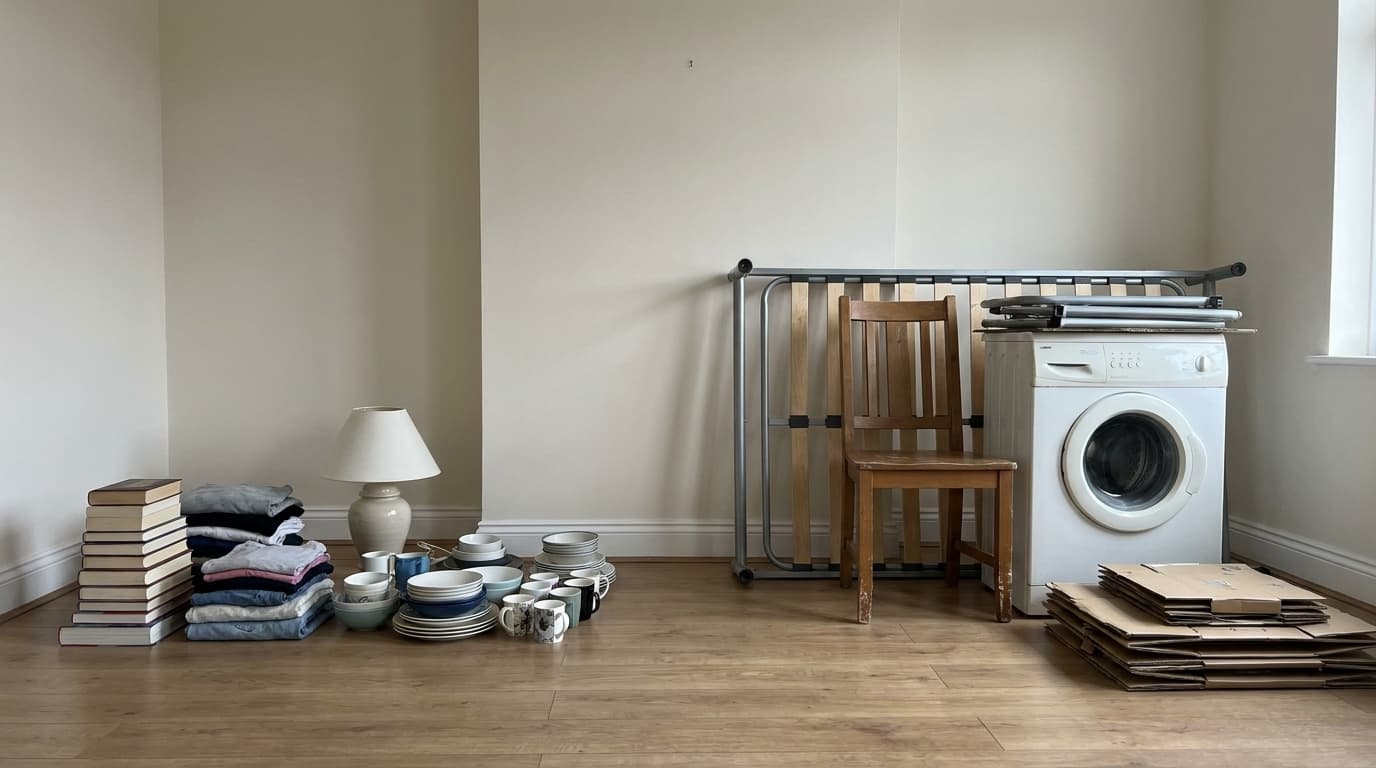
When a clearance team takes your items away, it's natural to wonder where everything goes. Do your belongings end up in landfill? Can usable items find a new home? Here's a straightforward look at what happens to your items after a professional house clearance, and how responsible companies handle the process.
Not Everything Goes to the Same Place
A common concern is that everything gets thrown away together. With a responsible clearance service, that's not what happens. Items are sorted and directed to the most appropriate destination based on their condition and type.
With our service, the process works in stages. Items are assessed during the clearance, then sorted afterwards into categories: items that can be reused, materials that can be recycled, and items that need to go to licensed facilities.
Items in Good Condition: Reuse and Donation
Furniture, clothing, books, kitchenware, and other household items that are still in usable condition can go to:
- Charity shops and organisations. Many local and national charities accept furniture, clothing, and household goods. Items in good condition are passed on so they can be used again.
- Community projects. Some items go to local community groups, shelters, or organisations that support families in need.
- Resale. Items with resale value may be sold through second-hand channels, helping to offset clearance costs in some cases.
If keeping usable items out of landfill matters to you, ask your clearance company about their reuse process before booking. A specialist house clearance service is more likely to have established relationships with charities and reuse organisations than a general skip hire company.
Recyclable Materials
Many items that can't be reused as they are can still be broken down and recycled. Common recyclable materials from a house clearance include:
- Metals: Bed frames, appliance casings, tools, radiators, and other metal items are taken to metal recycling facilities.
- Wood: Wooden furniture, shelving, and timber can be chipped and recycled, or used as biomass fuel.
- Textiles: Clothing, curtains, and fabrics that aren't suitable for charity shops can be recycled into industrial materials.
- Electrical items: Fridges, washing machines, TVs, and other electronics are taken to specialist facilities that recover valuable materials and handle hazardous components safely.
- Paper and cardboard: Books, magazines, packaging, and documents are recycled through standard paper recycling.
Items That Go to Licensed Facilities
Some items can't be reused or recycled and need to be taken to licensed facilities for proper handling. This includes:
- Mattresses that are stained or damaged beyond use
- Broken furniture that can't be repaired
- Mixed materials that can't be separated for recycling
- Certain types of flooring and insulation
A responsible clearance company takes these items to licensed sites, not fly-tip locations or unregulated dumps. This is one reason to choose a professional service over informal operators.
How This Compares to Skip Hire
With a skip, everything goes in together: furniture, metal, textiles, recyclables, and general items. The skip company takes it all to a transfer station where some sorting happens, but the reuse rate is typically much lower than with a clearance service that sorts items at the point of collection.
If you're weighing up the two options, our house clearance vs skip hire comparison covers the practical differences in detail.
What About Sensitive Items?
During a probate clearance or bereavement situation, families sometimes worry about personal items being treated carelessly. A good clearance company will:
- Give you time to sort through personal belongings first
- Set aside anything that looks valuable or personal during the clearance
- Handle items with care and respect throughout
- Destroy sensitive documents securely if requested
Our probate clearance guide covers how to prepare for this type of clearance in more detail.
Questions to Ask Your Clearance Company
If the destination of your items matters to you, ask these questions before booking:
- Do you sort items for reuse, recycling, and disposal separately?
- Do you work with charities or reuse organisations?
- Where do non-recyclable items end up?
- Are you licensed to carry and handle the types of items in my property?
A reputable company will answer these openly. If they can't tell you where your items go, that's worth knowing before you book.
Our Approach
We sort every clearance. Usable items are directed to charity and reuse channels, recyclable materials are taken to the right facilities, and everything else goes to licensed sites. It's part of how we operate, not an optional extra.
Whether you're booking a full house clearance, clearing a garage, or handling a probate situation, you can be confident that your items are handled responsibly.