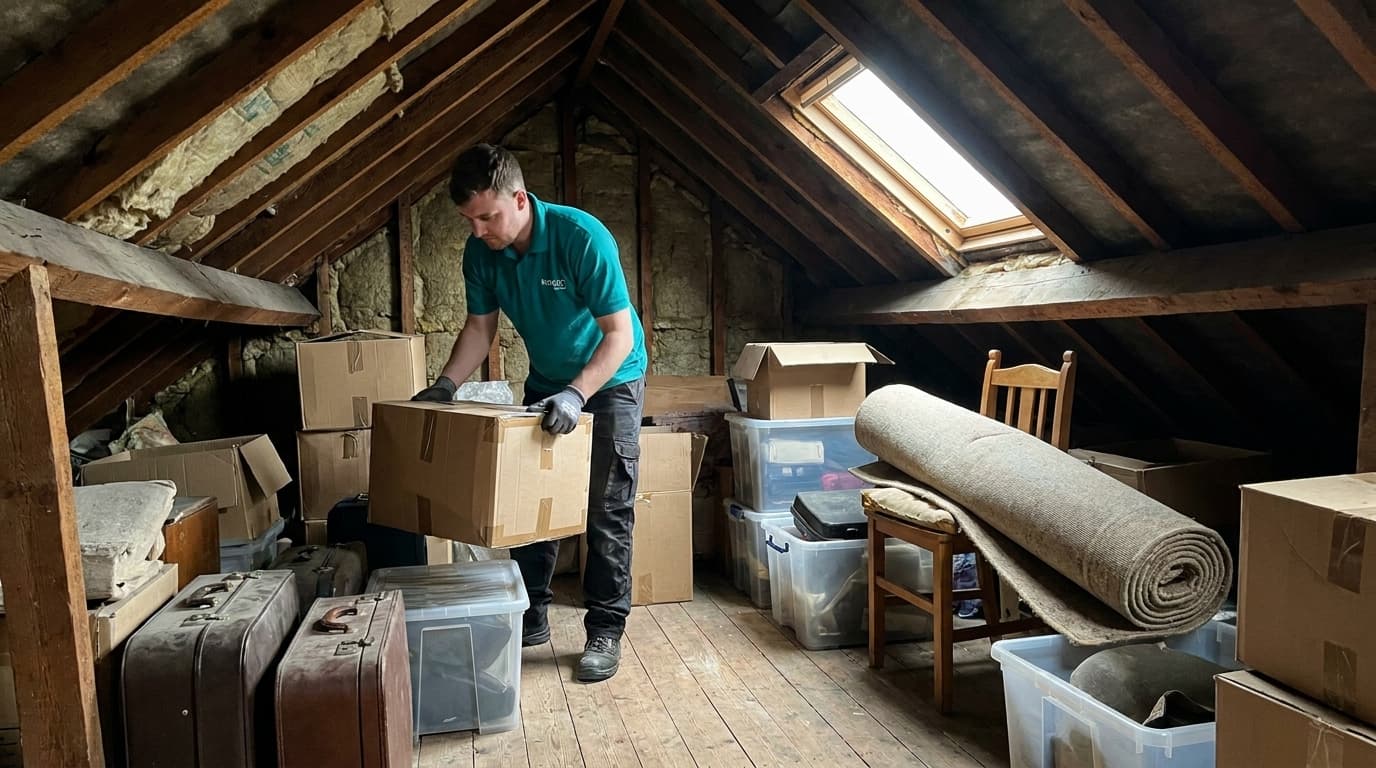
Lofts are one of the most overlooked spaces in a home. Over the years, they quietly fill with suitcases, old furniture, baby equipment, boxes of paperwork, and items you forgot were up there. When it comes time to clear it all out, the combination of awkward access, low ceilings, and heavy items makes it a bigger job than most people expect.
Why Lofts Are So Hard to Clear
Unlike a room at ground level, a loft presents specific challenges that make clearing it difficult and sometimes risky:
- Access. Most lofts are reached via a pull-down ladder or a hatch with no fixed stairs. Carrying heavy boxes and furniture down a loft ladder is awkward at best and dangerous at worst.
- Low headroom. You often can't stand upright, which makes lifting and manoeuvring items much harder.
- Boarded and unboarded areas. Some lofts are only partially boarded. Stepping off the boards means stepping through the ceiling below.
- Insulation and dust. Years of accumulated dust, fibreglass insulation, and poor ventilation make it an unpleasant environment to work in for extended periods.
- Hidden weight. Boxes of books, old TVs, suitcases full of clothes, and dismantled furniture add up quickly. A full loft can contain far more weight than people realise.
What Typically Ends Up in a Loft
Over the course of a few years, lofts tend to accumulate a predictable mix of items:
- Suitcases and travel bags
- Christmas decorations and seasonal items
- Children's toys, cots, and baby equipment
- Old furniture (chairs, bedside tables, shelving units)
- Boxes of books, photos, and paperwork
- Redundant electronics (old computers, printers, cables)
- Rolled-up carpets and curtains from previous rooms
- Sporting equipment and camping gear
Much of it arrives with the thought "I might need this later." Years pass and it never comes back down.
When to Call in a Professional Team
If your loft has a few small boxes, you can probably manage it yourself with a trip to the tip. But a professional loft and attic clearance makes far more sense when:
- The loft is full or heavily loaded. Multiple trips up and down a ladder with heavy items is a recipe for injury.
- You have large or bulky items up there. Dismantled bed frames, wardrobes, and chest of drawers are difficult to get through a loft hatch safely.
- You're not confident on a ladder. There's no shame in this. Loft ladders aren't designed for carrying loads, and a fall from height is serious.
- You're preparing the property for sale. Buyers and surveyors want to see the loft. Clearing it makes the property more presentable and allows a proper inspection.
- You're converting the loft. Before any building work begins, everything needs to come out.
- The clearance is part of a probate or bereavement. Sorting through a loved one's belongings is emotional enough without the physical strain of loft access. A professional team can bring everything down for you to sort through at ground level, or handle the full clearance. See our probate clearance guide for more on this.
How a Loft Clearance Works
1. Tell Us What's Up There
Describe the contents and how full the loft is. If you can take a few photos through the hatch, that helps us give you an accurate upfront price. Mention any particularly heavy or bulky items.
2. The Team Arrives and Assesses Access
The team checks the loft hatch, ladder, and boarding situation. They plan the safest way to bring items down, protecting your landing, walls, and stairway in the process.
3. Everything Comes Down and Out
Items are carefully brought down from the loft, carried through the property, and loaded into the van. The team works methodically to avoid damage to the property and handles awkward items through tight hatches.
4. Responsible Handling
As with any clearance, items are sorted for reuse, recycling, or proper removal at licensed facilities. For more detail, see our guide on what happens to items after a clearance.
Loft Clearance Costs
Loft clearance is priced by volume, the same as any other clearance. A lightly loaded loft will fall into the lower pricing tiers, while a completely full loft may require a full van or more.
| Loft Contents | Typical Volume | Estimated Cost |
|---|---|---|
| A few boxes and small items | Partial load | From £115 |
| Half-full loft with some furniture | Half van | From £195 |
| Full loft, heavily loaded | Full van | From £345 |
These are guide prices. Your actual cost depends on what's up there and how much of it there is. For a full breakdown, see our guide to house clearance costs.
Safety Considerations
Loft clearance carries more physical risk than clearing ground-floor rooms. A few things worth knowing:
- Ladder safety. Loft ladders have weight limits. Carrying heavy items while climbing down can easily exceed them. Professional teams use proper techniques to pass items down safely.
- Ceiling risk. In unboarded or partially boarded lofts, it's easy to put a foot through the ceiling. A team that regularly clears lofts knows how to work in these spaces.
- Dust and insulation. Old loft insulation can irritate skin and lungs. Professional teams come prepared with the right equipment.
- Electrical hazards. Lofts often have exposed wiring, junction boxes, and lighting circuits. Moving heavy items around these needs care.
Combining with Other Areas
If you're clearing the loft, it often makes sense to clear other areas at the same time. Many customers combine a loft clearance with a garage clearance or a full property clearance. Doing everything in one visit is more cost-effective and means the whole job is done at once.
Tips Before Your Loft Clearance
- Check for anything you want to keep. If possible, have a quick look through the hatch before the team arrives. If there are specific items you want kept, let the team know.
- Clear the landing below. The team needs space to bring items down safely. Move anything fragile or valuable away from the loft hatch area.
- Mention the access situation. Is there a pull-down ladder, fixed stairs, or just a hatch? Is it boarded? This helps the team plan.
- Note any water tanks or wiring. If the loft has a water tank, boiler components, or exposed wiring, mention it when you book so the team can work around them safely.
For a more detailed preparation guide, see our complete clearance preparation checklist.